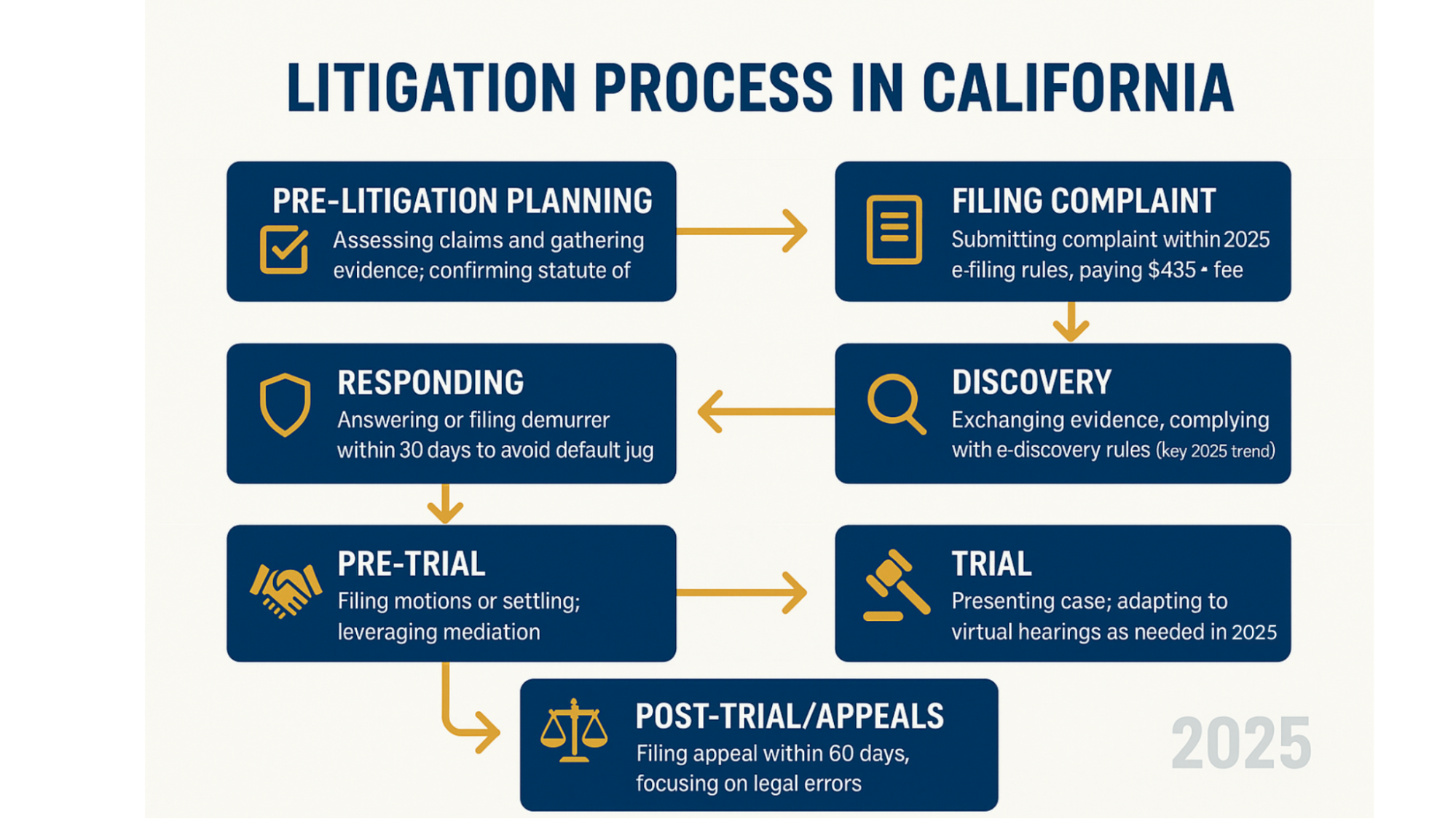


PAGA Litigation: Navigating Complex Procedural Requirements
Handling PAGA claims in California requires more than knowing the law; it demands mastering the procedure. Even experienced employment litigators can face setbacks when technical filing requirements or notice obligations are overlooked. The Private Attorneys General Act 2025 continues to evolve, adding new expectations around standing, exhaustion of remedies, and settlement approvals that can easily shift the course of a case.
Procedural compliance under PAGA is unforgiving, and missing a single step can derail months of preparation. That’s why effective PAGA litigation strategies center on preparation, precision, and proactive communication between counsel, clients, and the Labor and Workforce Development Agency (LWDA). Let’s break down the procedural rules, common mistakes, recent updates, and practical strategies that matter most in 2025 and beyond.
Core Procedural Steps in PAGA Claims in California
Successfully litigating PAGA claims in California begins with strict adherence to procedural prerequisites under California Labor Code Section 2699.3. An aggrieved employee must provide written notice to both the LWDA and employer, detailing specific Labor Code violations with supporting facts and theories. This notice can be filed online or sent via certified mail, triggering a 65-day period during which the LWDA may investigate and pursue violations independently.
The procedural timeline includes several critical deadlines that demand careful monitoring. Employers have 33 days to cure certain violations listed in Labor Code Section 2699.3(a)(2)(A). Once the LWDA’s 65-day period expires without agency intervention, the employee may file a civil action. When preparing your case, verify these essential requirements:
- Pre-filing notice: Submit a detailed written notice to LWDA and the employer with specific facts and violations
- Cure period compliance: Track the 33-day window for employer responses to curable violations
- LWDA waiting period: Wait the full 65 days before filing suit
- Standing verification: Confirm the plaintiff personally experienced each alleged violation
- Statute of limitations: File within one year of the last violation for individual claims
CEB’s OnLaw Pro plus Practitioner can guide you through the proper steps to take and offer sample case summaries and agreements to use.
Key Changes Under the Private Attorneys General Act 2025
The Private Attorneys General Act 2025 underwent significant reforms through Assembly Bill 2288 (AB 2288), signed June 27, 2024, with provisions effective immediately and others beginning June 19, 2025. These changes fundamentally altered how PAGA claims in California are litigated.
AB 2288 introduced heightened standing requirements under Labor Code Section 2699(c). Plaintiffs must now have personally suffered each specific violation they seek to pursue on behalf of other employees, a substantial departure from prior practice. Courts gained explicit authority under Section 2699(c)(4) to assess whether claims are manageable at trial, potentially limiting the scope of representative allegations. When evaluating your case, consider how these manageability standards apply.
Settlement procedures have also shifted significantly. The Private Attorneys General Act 2025 now mandates earlier and more detailed notices to the LWDA and affected employees under Section 2699(l). You must include specific information about proposed distributions, attorney fees, and factual bases for settlement terms. Courts scrutinize settlements more rigorously, evaluating whether amounts fairly reflect potential penalties and serve the public interest PAGA was designed to protect.
Common Pitfalls and How to Avoid Procedural Missteps in PAGA Litigation
Even experienced practitioners can stumble over technical requirements in PAGA claims in California, often with case-ending consequences. Insufficient pre-filing notice content remains a frequent error; merely listing code sections without explaining how violations occurred fails to satisfy Section 2699.3’s specificity requirements.
Timing errors also plague PAGA litigation. Filing before the LWDA’s 65-day review period expires results in dismissal for premature filing. Standing issues have intensified under the Private Attorneys General Act 2025, with plaintiffs asserting claims for violations they never personally experienced, a strategy that now invites dismissal. The following table summarizes key pitfalls and missteps to avoid.
| Common Pitfall | How to Avoid the Misstep |
| Vague or conclusory LWDA notice | Include specific facts, dates, affected pay periods; explain how violations occurred with supporting details |
| Filing before the 65-day period expires | Calculate exact dates from LWDA receipt; calendar the earliest permissible filing date and wait for full exhaustion |
| Asserting claims without personal standing | Verify plaintiff experienced each specific violation; limit representative claims to violation types personally suffered |
| Inadequate settlement notice | Provide detailed terms, distribution methodology, attorney fees, and adequate response time to affected employees |
| Failing to cure curable violations | Identify curable violations under §2699.3(a)(2)(A); respond within 33 days with compliant correction documentation |
Effective PAGA Litigation Strategies for Employers and Plaintiffs
Developing robust PAGA litigation strategies requires different approaches depending on representation, but both sides benefit from early case assessment. Plaintiff’s counsel should focus on identifying strong liability evidence, quantifying potential exposure, and determining whether cases present manageability challenges under the Private Attorneys General Act 2025. Gathering robust time records, pay stubs, and policies during pre-filing investigation strengthens both LWDA notices and subsequent complaints.
Defense counsel should immediately conduct internal audits upon receiving PAGA notice, evaluating potential exposure across all alleged violations and affected employees. Early assessment allows determination of whether curing violations within 33 days is strategically advantageous. When developing your approach, consider these key tactical elements:
- Evaluate manageability proactively: Assess whether claims can be tried efficiently under new standing and manageability rules.
- Structure settlements strategically: Consider distribution formulas that satisfy court approval standards while meeting client objectives.
- Coordinate with parallel proceedings: When PAGA claims California overlaps with class actions, determine optimal sequencing to avoid duplicative discovery.
- Leverage early mediation: Given high statutory penalties, explore mediation before protracted litigation when exposure is clear.
Leveraging a comprehensive Course Catalog can sharpen your approach to evidence and witness preparation.
Stay Ahead in PAGA Litigation with CEB
Successfully managing PAGA claims in California means keeping pace with procedural updates under the Private Attorneys General Act 2025 and applying sound PAGA litigation strategies. Every notice, filing, and settlement requires precision. CEB’s OnLAW® Pro and Practitioner provide current case law and practical templates, while the CEB MCLE offers focused training to refine your litigation skills. With the right resources, you can handle PAGA cases efficiently and maintain the procedural excellence your clients expect.